Buying luxury property in India is a distinct exercise — legally, financially and experientially. This guide walks through the sequence most first-time luxury buyers benefit from following.
- Diligence begins with RERA and title, not the show flat.
- Understand the brand licence structure for any branded residence.
- Payment plans, maintenance and service charges deserve careful review.
Buying luxury property in India is a distinct exercise from buying at any other price point. The financial commitment is larger, the legal terrain is denser, the operational obligations extend well beyond the sale, and the emotional pressure to move quickly — driven by scarcity, brand and beautifully staged show flats — is stronger than in any other segment of the market. Get the sequence right, and the process is orderly. Get it wrong, and mistakes compound: title issues that surface at possession, service charges that read differently than they were explained, brand licences that expire, or payment plans that mismatch a buyer's liquidity profile.
This guide is written for first-time luxury buyers evaluating homes in the ₹5 crore-plus segment — with particular attention to branded residences and hospitality-led communities, where the diligence extends beyond the physical building to the operating framework behind it. It is a working manual, not a promotional overview. Read it before your second site visit, not after your allotment letter arrives.
Start with the paperwork, not the show flat
The show flat is designed to move you emotionally. The paperwork is designed to protect you legally. Look at the paperwork first, and the show flat will read differently — you will notice what the marketing brochure omits and what the legal filings confirm. The Real Estate (Regulation and Development) Act of 2016 — RERA — is the starting point. Every project offered for sale in India must be registered with the relevant state's RERA authority before marketing. In Haryana, that is HRERA; in Delhi, it is DRERA; in Maharashtra, MahaRERA. The registration itself is only a starting point; the disclosures behind it — approved layout plan, sanctioned building plan, promoter details, timeline, financial disclosure and any deviations — are the actual diligence surface.
What to pull, in order
- RERA registration certificate and the full set of quarterly disclosures.
- Land title chain — mother deed, mutation record, sale deeds and any encumbrances.
- Licence issued by the Directorate of Town and Country Planning (DTCP) in Haryana, or the equivalent state authority.
- Sanctioned building plan and zoning clearance.
- Environmental clearance from SEIAA or MoEFCC as applicable.
- Fire NOC and structural design certification.
- For ready inventory — the occupancy certificate (OC) or completion certificate (CC).
Understand the ownership structure
In most Indian luxury projects, what you are buying is an apartment within a group housing colony — a unit of a larger licensed development. The title is transferred through a builder-buyer agreement (BBA) at booking, and through a conveyance deed at possession or on association handover. Read both drafts before signing the BBA. A well-drafted BBA specifies the exact carpet, built-up and super-built-up areas; the payment schedule; the possession date and grace period; the events of default; and the buyer's remedies. Look particularly for clauses on: allocation of common areas, right of the developer to alter the layout, service charge escalation, transfer restrictions, and the framework for the resident welfare association.
Branded and hospitality-led residences — the additional layer
If the residence carries a global hospitality or luxury brand — Marriott, Ritz-Carlton, Four Seasons, Aman, Bulgari, or others — the diligence extends beyond the developer to the operator. In a genuine branded residence, the brand is not a marketing tie-up: it is a licensed operator with a residential operating agreement (typically 20 to 40 years) that governs the service standard, staffing model, brand-standard compliance, and often the right to intervene in specified events.
Questions to ask about the brand structure
- What is the term of the residential licence and operating agreement?
- Are the brand-standard operating manuals contractually binding on the operating entity?
- What is the escalation and dispute-resolution framework between the developer, the operator and the residents' association?
- What happens at the end of the licence term — renewal, revert or transition?
- Which entity employs and trains the residential service team?
"A branded residence is only as good as the residential operating agreement behind it. Read that agreement before you read the price list."
— Editorial
Model the payment plan against your liquidity
Luxury projects typically offer two structures. Construction-linked payment plans tie tranches to physical progress — foundation cast, structure at slab N, brickwork, MEP completion, and finishing. Time-linked plans tie tranches to calendar dates regardless of progress. Each has trade-offs. Construction-linked plans align incentives — the developer receives funds only when milestones are met — but expose the buyer to timeline risk on the later tranches. Time-linked plans give predictability to both sides but require the buyer to fund milestones the developer has not yet delivered.
Whichever plan applies, model it against three variables: your cash-on-hand, the yield you earn on the balance while it is not deployed, and any home loan you intend to use. For NRI buyers, add a fourth variable: the exchange rate you assume, and the notional cost of a currency movement of ten per cent in either direction over the payment horizon.
| Construction-linked | Time-linked | |
|---|---|---|
| Cash flow predictability | Lower — tied to progress | Higher — fixed dates |
| Alignment with developer | Stronger | Weaker |
| Risk if project delayed | Lower — payments pause | Higher — payments continue |
| Interest cost on drawn loan | Lower in early years | Higher in early years |
Financing — how luxury home loans differ
Home loan appraisal at the luxury end of the market is materially different from mid-market appraisal. Loan-to-value (LTV) is typically capped at 75 per cent for ticket sizes above ₹75 lakh and 65 per cent above ₹3 crore. Interest rates cluster within a narrow band across major lenders, so the negotiation is less about the headline rate and more about processing fees, prepayment terms, and the flexibility of the drawdown schedule. For NRI buyers, financing runs through NRE or NRO accounts under FEMA guidelines, with additional documentation on the source of funds and the repatriation framework. Engage the lender in parallel with the diligence — a formal sanction letter takes three to six weeks in most cases, and a delayed sanction can become a booking-timing problem.
The GST and stamp duty picture
GST is applicable at 5 per cent on under-construction residential property without input tax credit, and 1 per cent for affordable housing (not relevant at the luxury end). GST does not apply on ready-to-move-in inventory that has received an occupancy certificate. Stamp duty and registration charges vary by state — in Haryana, urban stamp duty is 7 per cent (5 per cent for female buyers under the current schedule) with a 0.5 per cent registration fee. Model these into the total acquisition cost from the first spreadsheet, not the last.
The site visit that actually helps
Show flats are designed to impress. The site itself tells you more about what you are buying. Visit at least twice — once during a weekday morning and once during a weekend evening — and structure each visit around specific questions rather than a passive walk-through.
- Weekday morning — traffic patterns, school drop-off flow, ambient noise, air quality.
- Weekend evening — social density, lighting, security posture, parking behaviour.
- Ask to see the finished common areas, not only the show flat.
- Ask to speak to at least two current residents in a comparable delivered project by the same developer.
- Verify the sample kitchen, bathroom and utility specifications physically — read the brand names off the fittings.
Service charges and the total cost of living
Luxury and branded residences carry service charges materially higher than mid-market projects — often ₹15 to ₹35 per square foot per month depending on the amenity depth and operator. Ask for a line-item breakdown: which staff and services are included in the base charge; what is billed à la carte; what is escalation-indexed; and what is fixed. Model five years of service charges into the total cost of ownership. For a 4,500 square-foot residence at ₹25 per square foot per month, that is ₹67.5 lakh over five years — larger than many buyers instinctively assume.
Legal counsel — non-negotiable at this ticket size
Engage an independent property lawyer — not one recommended by the developer — before you sign the BBA. A luxury property lawyer typically charges a fixed retainer of ₹1.5 to ₹5 lakh depending on the complexity of the transaction, and reviews the title chain, the RERA disclosures, the BBA draft, the payment schedule, the operating agreement (for branded residences), the tax structuring and any indemnity language. The cost is trivial against the transaction size and mispriced diligence risk.
For NRI buyers — additional considerations
- Payments must route through NRE, NRO or FCNR accounts under FEMA — not through personal offshore accounts.
- TDS at 20 per cent applies at sale by an NRI seller — plan repatriation and Form 15CA/15CB from the outset.
- Repatriation caps of USD 1 million per financial year apply on the sale proceeds under LRS.
- Consider a power of attorney executed and apostilled well in advance of key registration dates.
- Tax residency in both jurisdictions matters — model the DTAA implications with a cross-border tax adviser.
The negotiation that is available
Luxury pricing is generally firm on headline, but flexibility exists in adjacent line items. Common negotiable levers include: parking count, storage allocation, floor and view premiums, timing of the last tranche, GST-inclusive versus GST-exclusive quoting, and inaugural benefits during pre-launch phases. Approach the negotiation with a single, well-modelled ask rather than a scattered list — sales teams respond to specificity, not to volume.
Key takeaways
- Documents before design — pull RERA, title, licence and approvals first.
- For branded residences, read the residential operating agreement, not only the sales brochure.
- Model the payment plan against your liquidity, financing and (for NRIs) currency exposure.
- Visit the site at two different times of day, and speak to residents of comparable delivered projects.
- Engage independent legal counsel before signing the BBA.
The final word
A well-conducted luxury purchase is unglamorous. The buyers who look back on the process with satisfaction — years after possession, when the residence has settled into daily life — are almost always the ones who spent more time on the paperwork than on the finishes, and who treated the transaction as a corporate diligence exercise rather than a lifestyle decision. The residence itself becomes a lifestyle over the decades that follow. The purchase, done right, takes weeks.
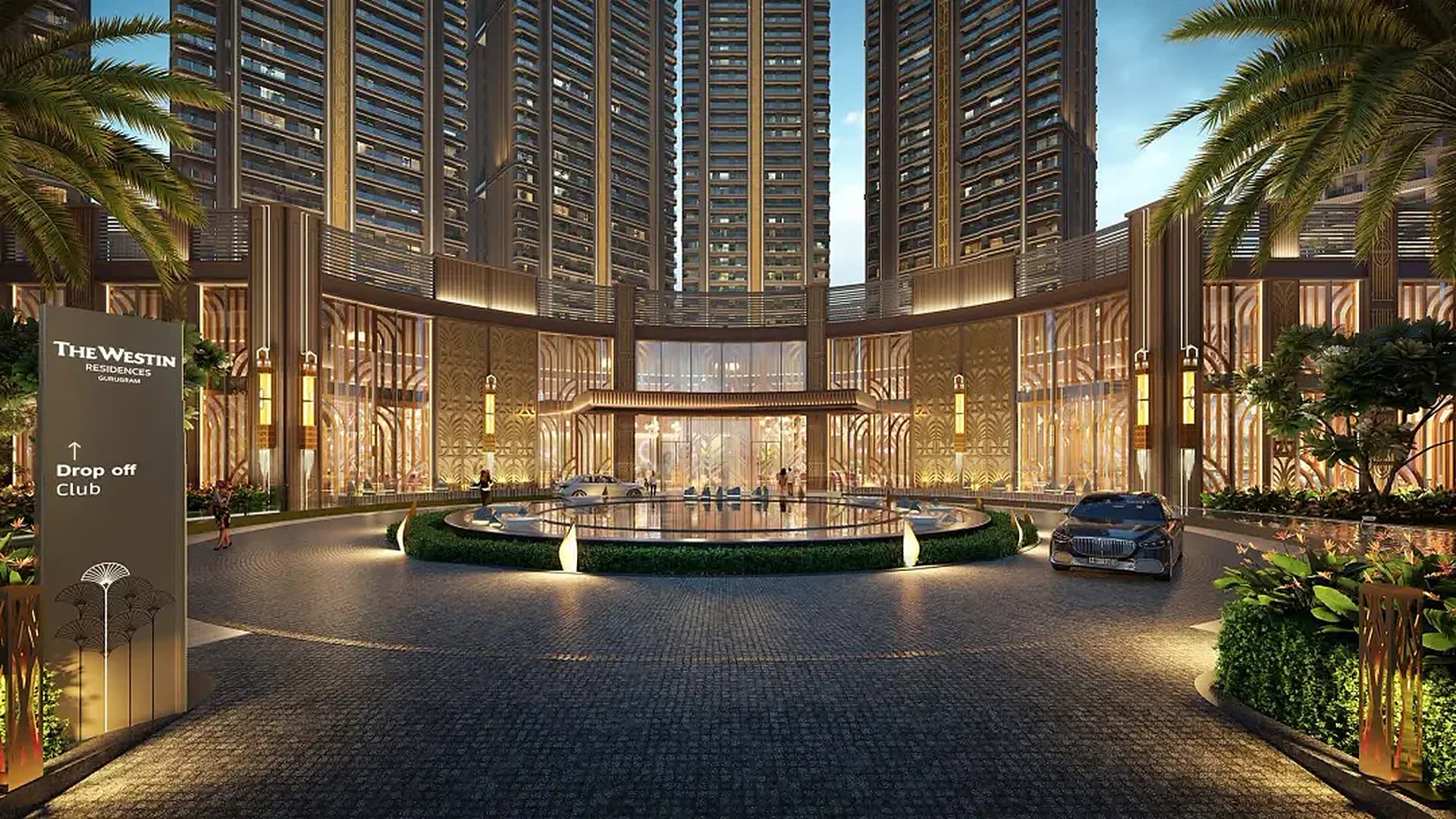
Start your diligence with the full brochure, RERA disclosures and payment plan for The Westin Residences Gurgaon.
Frequently Asked
Is RERA registration enough to trust a project?
RERA is a starting point, not a guarantee. The registration confirms a project exists in the regulatory system; the quarterly disclosures and the promoter's compliance history behind it are the actual diligence surface. Always pull the full disclosure set, not only the registration number.
Should I use a lawyer for a luxury purchase?
Yes — an independent property lawyer, not one recommended by the developer, is standard practice at this ticket size. Expect a fixed retainer of ₹1.5 to ₹5 lakh depending on complexity, covering title, RERA, BBA, operating agreement and tax review.
What is a branded residence licence, and why does it matter?
A branded residence licence is the operating agreement between the developer's ownership entity and the hospitality brand, governing service standards, staffing, brand compliance and term. It is what turns a hotel name on a building into an actual operating discipline inside it. Read the term, the renewal framework and the intervention rights before booking.
Are prices negotiable in luxury real estate?
Headline pricing is generally firm at genuine luxury developments. Negotiation typically happens on adjacent line items — parking, storage, floor and view premiums, payment timing, and inaugural benefits during pre-launch.
How much should I budget for stamp duty, GST and registration on top of the base price?
In Haryana, plan on 5–7 per cent stamp duty, 0.5 per cent registration, and — if the property is under construction — 5 per cent GST. Model the total acquisition cost from the first spreadsheet.
The Editorial Desk
In-house editorial team
The in-house editorial team at The Westin Residences Gurgaon. We write for buyers, investors and the curious — the way a magazine writes, not the way a brochure does.
View profile